Video lesson for each module
Professional dermatology–cosmetology program
Couperose and vascular-reactive skin
Endothelial, neurovascular, and neuroimmune regulation
5 Zoom sessions with the instructor
Author book for the program
About the programme
Training program
A scientific approach to vascular-reactive skin
The program explores couperose and reactive skin through endothelial, neurovascular, and neuroimmune regulation — so the specialist understands mechanisms rather than working only with visible signs.
01
Deep understanding of skin mechanisms: microcirculation, endothelium, neural and immune regulation.
02
Effective protocols and cosmetic biochemistry for real practice with hyperreactive skin.
Safety at the core of every recommendation — and professional growth through confident clinical thinking.
Result
What you will learn
- Understand microcirculation and the shift from transient vasodilation to persistent vascular changes.
- Work with endothelial dysfunction, neurogenic inflammation, and TRP hyperreactivity.
- Distinguish couperose from rosacea and spot red flags for dermatologist referral.
- Build care and treatments with barrier, oxidative stress, and photodamage in mind.
- Use professional protocols for flushing, telangiectasia, and hyperreactive skin.
- Answer not only “what to apply,” but also “why the skin reacts this way.”
Programme
Training modules
19 modules: from microcirculation and neuroimmune mechanisms to professional protocols and clinical thinking.
Module 01
Skin microcirculation
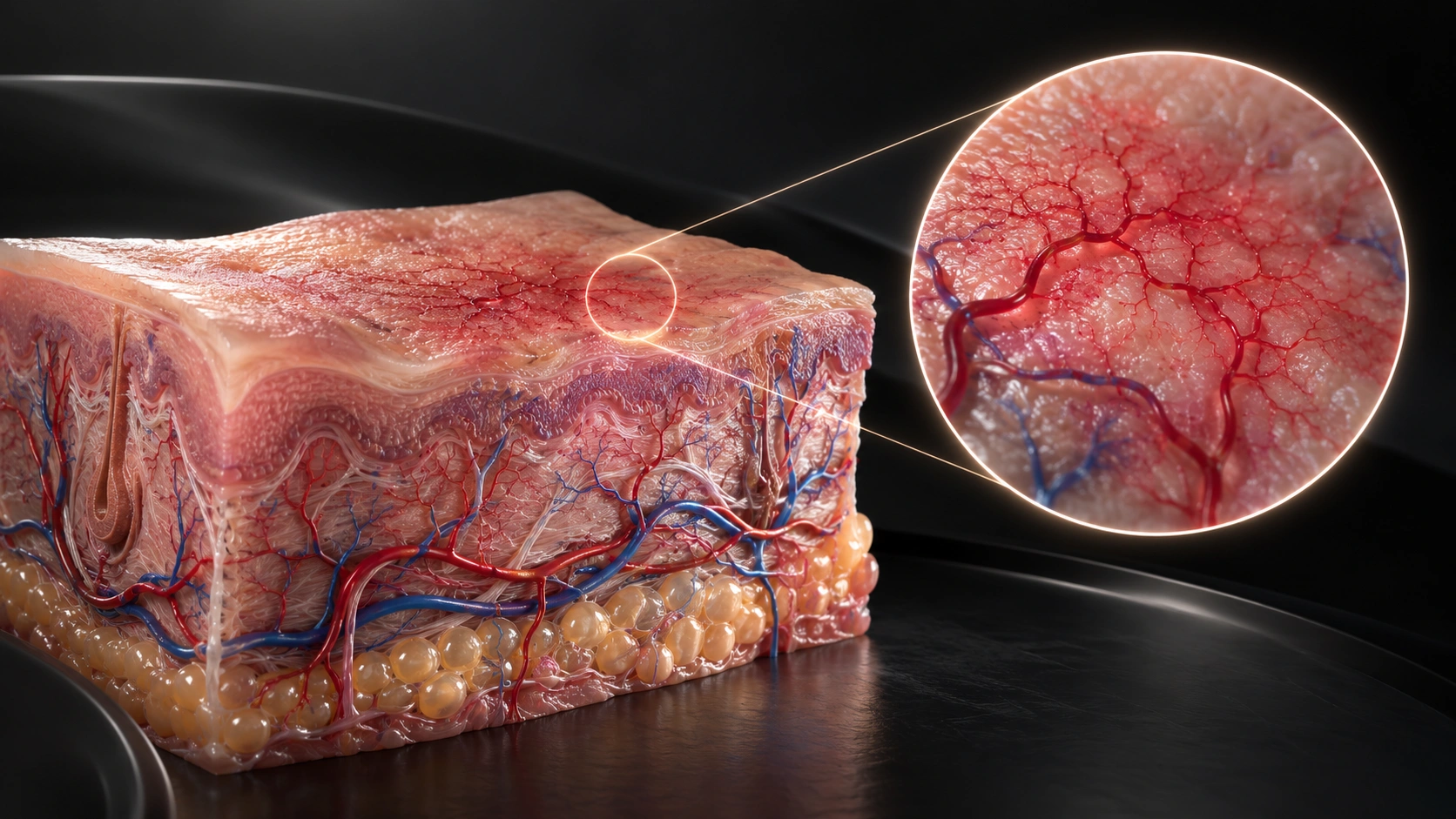
- anatomy of the microcirculatory bed, plexuses, and arteriovenous anastomoses;
- capillary blood flow, perfusion, transcapillary exchange, and permeability;
- regulation of local blood flow and the shift to lasting vascular changes.
Module 02
Endothelium as an active vessel regulator
- structure, barrier, and functions of endothelial cells;
- vasoactive mediators: NO, eNOS, endothelin-1, prostacyclin;
- endothelial dysfunction, oxidative stress, and inflammation.
Module 03
Neural regulation of skin vessels
- skin innervation and sympathetic regulation of blood flow;
- emotional flushing and the vascular stress response;
- temperature-induced reactions and the nerve–vessel connection.
Module 04
Neurogenic inflammation
- activation of sensory endings and neuropeptides: Substance P, CGRP, PACAP;
- vasodilation, permeability, heat, burning, and hypersensitivity;
- neuroimmune inflammatory cascade and mast cells.
Module 05
TRP channels and vascular hyperreactivity
- TRP family: TRPV1–4, TRPA1;
- temperature, UV, capsaicin, and chemical irritants;
- flushing mechanisms and the irritant potential of cosmetic ingredients.
Module 06
Stress — skin — vessels
- HPA axis, catecholamines, cortisol, and sympathetic activation;
- stress effects on inflammation and barrier function;
- stress as a modifying factor in flushing and couperose.
Module 07
Skin neuroimmunology
- keratinocytes, mast cells, macrophages, neutrophils, dendritic cells;
- TLR2, cathelicidin LL-37, KLK5, and antimicrobial peptides;
- the link between immune inflammation and vascular signs of rosacea.
Module 08
Mast cells and the vascular response
- degranulation, histamine, tryptase, and cytokines;
- interaction of Substance P and mast cells;
- the neuroimmune–vascular loop of chronic inflammation.
Module 09
Angiogenesis and formation of visible vessels
- flushing vs lasting erythema;
- VEGF, endothelial activation, and network remodeling;
- telangiectasia and the limits of cosmetic action on vessels.
Module 10
Oxidative stress and the endothelium
- ROS, free radicals, and the skin’s antioxidant system;
- UV-induced oxidative stress;
- the role of antioxidants in maintenance care.
Module 11
Skin barrier — nerves — vessels
- stratum corneum, ceramides, lipids, and TEWL;
- barrier disruption → sensory activation → inflammation;
- the pathological cycle amplifying skin sensitivity.
Module 12
Couperose and rosacea are not the same
- the aesthetic concept of couperose and telangiectasia;
- transient and persistent erythema, rosacea phenotypes;
- diagnostic boundaries of the cosmetologist.
Module 13
Demodex and the microbiome
- healthy skin microbiome, D. folliculorum and D. brevis;
- Demodex density in rosacea and the inflammatory response;
- limits of cosmetology assessment and referral to a physician.
Module 14
Hormonal and metabolic regulation of vessels
- estrogens, menopause, and hot flashes;
- alcohol, hot food, exertion, and temperature;
- distinguishing a cosmetic concern from systemic causes of flushing.
Module 15
Photodamage and vessels
- UVA/UVB, ROS, MMP, and dermal matrix damage;
- chronic UV exposure and telangiectasia;
- the importance of daily photoprotection.
Module 16
Differential assessment of erythema
- couperose, rosacea, dermatitis, and photodermatoses;
- drug-induced flushing and hormonal hot flashes;
- red flags and referring the client to a dermatologist.
Module 17
Cosmetic biochemistry and active ingredients
- niacinamide, azelaic acid, ceramides, centella, antioxidants;
- molecular targets of ingredients;
- irritant potential of acids, retinoids, essential oils, and alcohols.
Module 18
Professional protocols
- protocols for flushing, telangiectasia, persistent erythema, and hyperreactivity;
- pathophysiological rationale, stages, home care, and SPF;
- effectiveness criteria and indications for physician referral.
Module 19
Clinical thinking for the cosmetologist
- vascular response as interaction of nerves, immunity, and endothelium;
- identifying the leading reactivity driver in a specific client;
- a safe strategy: understanding causes, not only correcting signs.
Benefits
What’s included
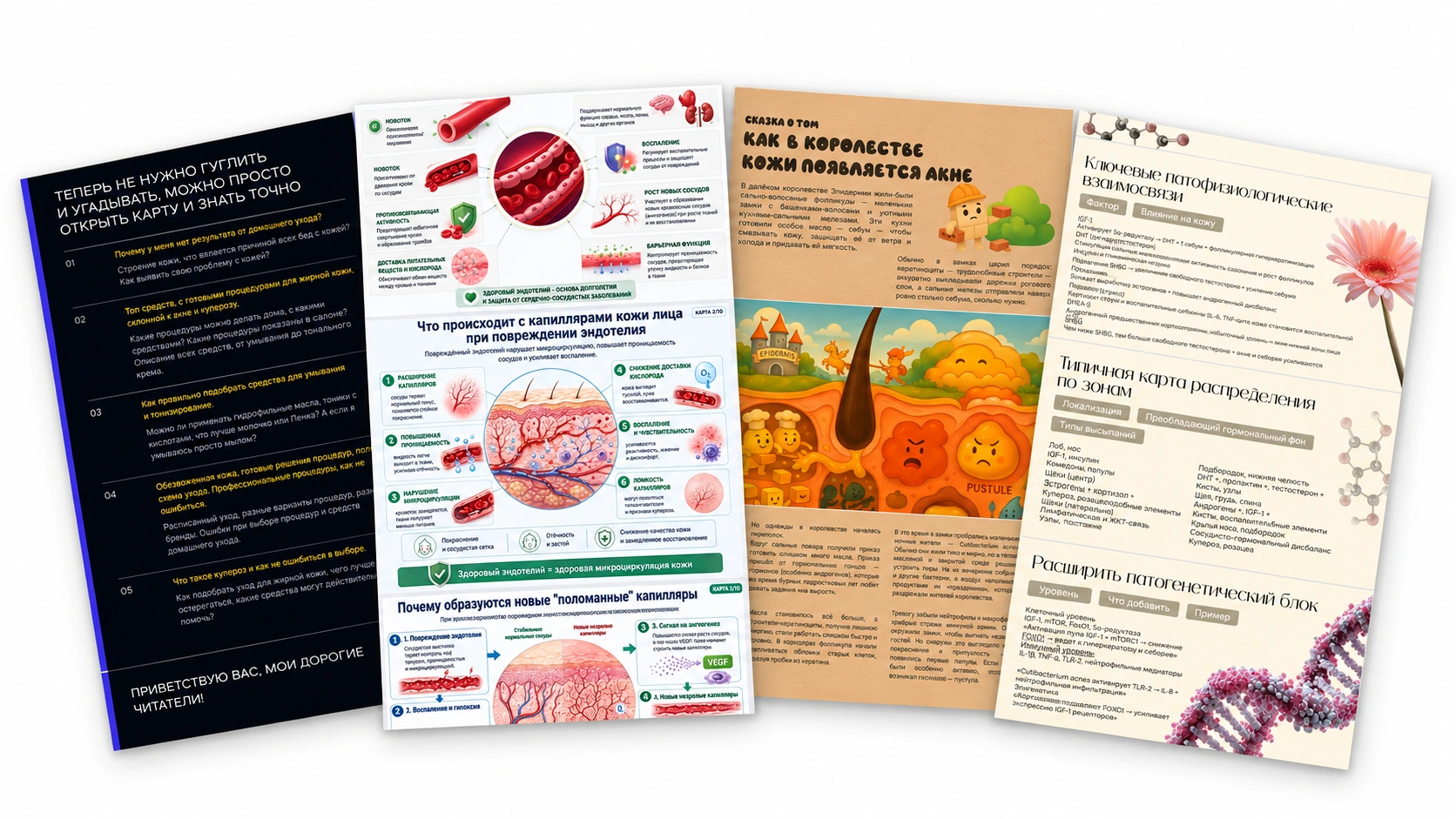
A video lesson for each module — learn at your own pace.
5 live Zoom sessions with the instructor for review and consolidation.
An author book based on the program — a working reference after training.
Safety as foundation: scope of practice and red flags for the physician.
Ready professional protocols for real work with vascular-reactive skin.
Plans
Tuition
special price
Couperose and vascular-reactive skin
- 19 training modules
- Video lesson for each module
- 5 live Zoom sessions with the instructor
- Author book based on the program materials
- Professional protocols and clinical thinking
750 €
350 €
Cosmetologists and aestheticians who want to work confidently with vascular-reactive skin, flushing, and telangiectasia — and understand the boundary with rosacea.