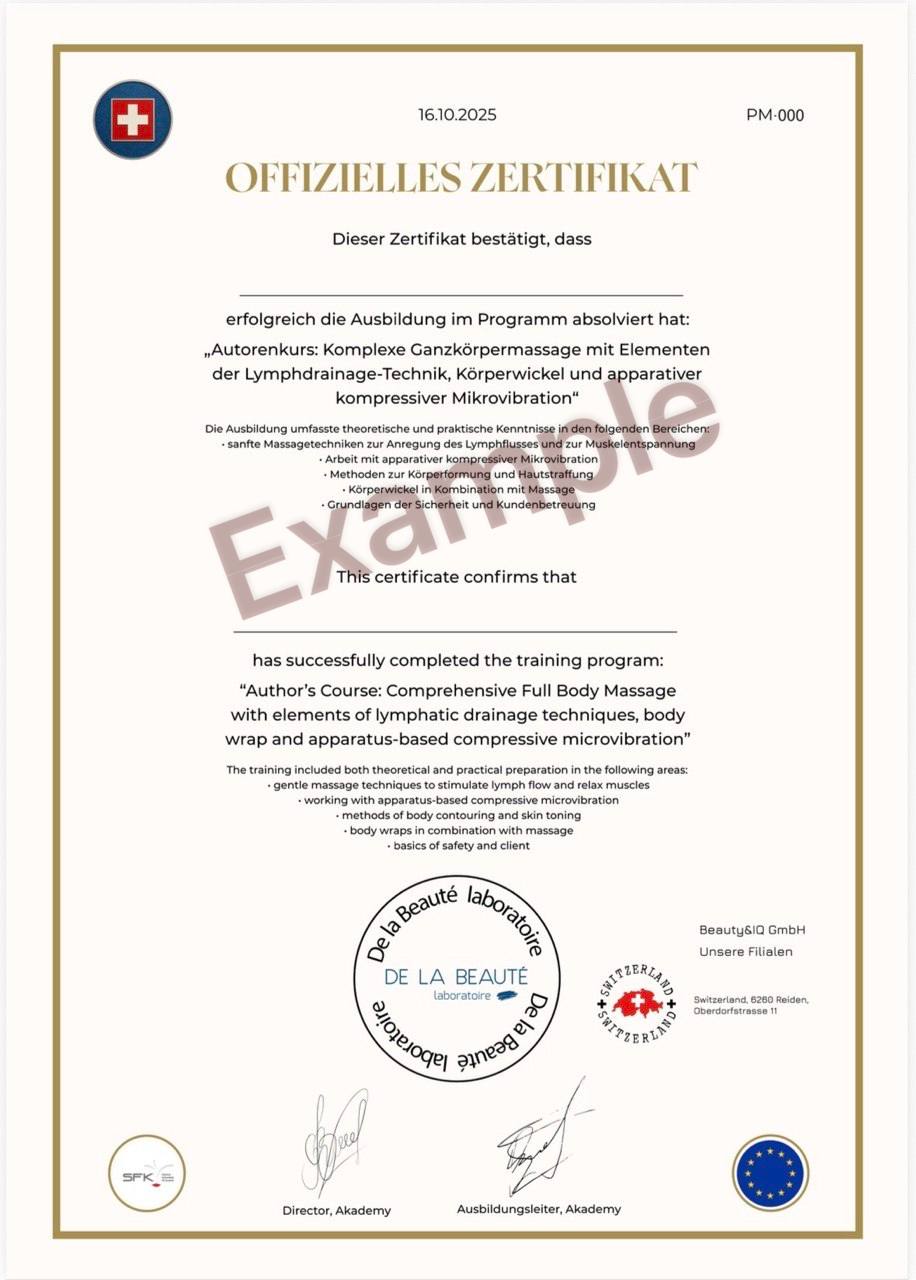
An intensive course in signature massage techniques at the Swiss school of aesthetic cosmetology — a specialised programme for professional mastery of modern massage techniques for comprehensive face and body work.
Upon completing the course, participants receive:
Official Swiss certificate in signature massage techniques;
A syllabus with detailed protocols and schemes confirming mastery of the techniques and their practical application;
Access to signature working materials for further professional client work.
We have gathered all our signature massages into one programme
Structured study material for face and body work: myofascial and sculptural techniques, the signature «Anti-Hump & Face Lifting» method, Endosphères device aesthetics, and Japanese body massage.
These techniques are chosen by leading European aesthetic cosmetology schools and luxury salons. Now they are available for you to master as well.
What you will gain from the programme
You will master elite massage methods that deliver a visible result after the first treatment.
You will learn to work not only with the skin, but with deep muscle and fascial layers — an alternative to injections and device treatments.
You will receive signature protocols for different age groups and aesthetic concerns.
You will learn to sculpt the face by hand: a clear oval, reducing oedema, smoothing wrinkles.
Why it pays off for a cosmetologist
Exclusivity
Techniques from leading European schools and luxury salons.
Higher ticket
Services with a clear result and premium positioning.
Loyal clients
A noticeable effect after the first treatment.
Status growth
Expert standing through depth and signature protocols.
5 live Zoom sessions with the instructor, in-depth anatomy and muscle analysis, hand placement coaching, and review of your technique during training.
Programme
Types of massage
Each massage is a distinct method. Open a card to see the full programme.
Massage 01
Myofascial and French sculptural facial massage
Elite face, neck and décolleté methods with a visible result after the first treatment
Learn more →
Massage 02
Signature massage «Anti-Hump & Face Lifting»
Work with the neck–shoulder girdle and natural lifting of the facial oval
Learn more →
Massage 03
Endosphères and sculptural body massage
Device aesthetics + manual techniques for body contours and lymphatic drainage
Learn more →
Massage 04
Japanese body massage
Deep diaphragm work and restoring body balance
Learn more →
Massage 01
Myofascial and French sculptural facial massage
French sculptural massage of the face, neck and décolleté
A unique blend of classical European techniques, lymphatic drainage and neurosensory stimulation for deep facial muscle work and improved skin tone.
Effective reduction of oedema, muscle relaxation, restored tone and a lifting effect from the first session.
A detailed review of facial muscle anatomy and neurolymphatic activation techniques.
Vector lifting: targeted work along myoaponeurotic lines to sculpt the oval and lift tissues.
Facial sculpting massage — shaping harmonious features, emphasising the cheekbones, reducing a double chin and asymmetries.
Results for the client
Reduction of oedema and pastosity
Pronounced lifting of the facial oval and neck
Smoothing of wrinkles: glabellar lines, nasolabial folds, forehead lines, crow’s feet, under-eye wrinkles, folds at the corners of the mouth (marionette lines)
Relaxation of the masticatory muscles and relief of head tension
Improved microcirculation and skin quality
Myofascial facial massage
«Anatomical atlas of face and body muscles» — an in-depth review of muscle and fascia work
Vietnamese facial massage (non-surgical lift)
Vietnamese massage combined with buccal massage of the face, neck and scalp (a rare technique)
Reducing a double chin, working with muscle tension, improving scalp microcirculation
Signature protocols: combining techniques for specific concerns; cheekbone sculpting, work with creases and asymmetries
Practice under the guidance of a rehabilitation specialist with 15 years of experience
Results of myofascial massage
reduced appearance of a double chin
relaxation of facial expression muscles
reduced muscular and head tension
improved scalp microcirculation
more defined cheekbones and a harmonious facial oval
reduced “tired face” appearance
softening of wrinkles by releasing muscle blocks
harmonised features and visual rejuvenation
What you will study
Anatomy and physiology of the face, neck and décolleté in the context of oedema and age-related change
Mechanisms of lymph and fluid stagnation, oedema and tissue laxity, and principles of safe work with them
Neurolymphatic activation and gentle drainage techniques
Stages of classical French massage: rhythm, glide, pause, neuroconnection
Lifting method: working with the myoaponeurotic layer (SMAS) without pain or overstrain
Techniques for oedema and tone restoration around the eyes, cheeks, facial oval and décolleté
Massage finishing rituals — French aesthetics in detail
Suitable for
Cosmetologists and massage therapists working with face and body
Practitioners in anti-age, wellness and spa fields
Specialists seeking natural lifting methods without injections
Beginners who want to master a technique with a clear aesthetic effect from the start
All of these techniques involve deep soft-tissue work and differ from more superficial massage methods used in cosmetology.
Training in a signature manual method grounded in deep understanding of anatomy, biomechanics, the lymphatic system, and modern approaches to aesthetic face and body correction.
The programme combines sculptural techniques, elements of Japanese and Vietnamese massage approaches, myofascial work, and lymphatic drainage protocols aimed at restoring tissue balance and natural facial lifting.
About the method
The buffalo hump, or dorsocervical fat pad, forms in the C7 area — the 7th cervical vertebra — and is both an aesthetic and a functional concern.
Its appearance is often accompanied by myofascial imbalance in the neck and shoulder girdle, impaired tissue mobility, and reduced lymphatic and venous outflow.
At the root of such changes are:
hypertonus of the trapezius muscle
shortening of the levator scapulae muscle
tension of the splenius capitis muscle
overload of the sternocleidomastoid muscle
dysfunction of fascial chains of the superficial back line
These changes can lead to:
impaired lymphatic and venous outflow
congestion in the lymphatic collectors of the neck
impaired microcirculation in facial tissues
reduced tone of the muscles of the lower third of the face
deformation of the facial oval
appearance of a double chin
pastosity and oedema
deepening of the nasolabial folds
ptosis of facial soft tissues
Essence of the method
«Anti-Hump & Face Lifting» is a comprehensive signature technique aimed at restoring functional balance of muscles and fascia, improving lymph drainage and microcirculation, and visually rejuvenating the face through deep work with the neck and shoulder girdle.
The method combines:
sculptural techniques for modelling the face and neck
Japanese and Vietnamese massage elements
myofascial release of tense muscle structures
lymphatic drainage techniques to reduce oedema and pastosity
lifting protocols to improve facial oval and tissue tone
Work begins with deep treatment of the neck and shoulder girdle, decompression of the C7–Th1 area, release of muscular and fascial tension, restoration of tissue mobility, and normalisation of drainage.
This is followed by a sculpting facial lifting massage that activates blood supply, improves tissue trophism, and helps create a clearer, more lifted facial oval.
Result after the first treatment
reducing the appearance of the buffalo hump
improving cervical mobility
normalising lymphatic outflow
reducing facial pastosity and oedema
a clearer facial oval
reducing a double chin
improving skin quality and trophism
visual lifting without injectable intervention
The effect of the method is often compared to aesthetic facial correction — yet it is achieved through natural manual work, without injections or aggressive procedures.
Theoretical block
anatomy of the cervicoscapular zone
biomechanics of the cervical spine
causes and mechanisms of buffalo hump formation
the impact of the cervicoscapular block on facial ageing
fascial chains and their role in facial aesthetics and posture
the lymphatic system of the head and neck
indications, contraindications, and rules for safe practice
Practical block
myofascial work with the trapezius muscle
decompression of the C7–Th1 zone
techniques for working with deep muscle layers
lymphatic drainage of the cervicofacial zone
sculptural techniques for modelling the facial oval
elements of Japanese and Vietnamese massage methods
facial lifting massage
work with the neck, lower third of the face, and chin area
Who this training is for
The programme is designed for specialists who want to:
expand the range of professional services
master an in-demand signature method
work not only with the aesthetic sign, but with the cause of change
offer clients natural rejuvenation without injections
achieve a pronounced visual result after the very first treatment
After training you will receive
A ready comprehensive method combining an anatomical approach, sculptural tissue work, lymph-drainage techniques, and elements of Eastern massage schools.
work confidently with the hump zone and the cervical-collar block
improve the facial oval through deep functional correction
enhance results by combining several effective techniques
stand out on the market with a signature protocol that delivers a clear result
Professional training in Endosphères Therapy and sculptural body massage
Master one of the most in-demand methods in modern device-based aesthetics and learn to work with the body skilfully — grounded in anatomy, tissue physiology, and the mechanisms behind aesthetic change.
This course combines a theoretical foundation, professional technique training, practical understanding of tissue work, and mastery of effective protocols for improving skin quality, body contours, and lymphatic drainage.
About the programme
Training is designed so the specialist does not simply operate a device mechanically, but understands tissue processes: congestion, oedema, cellulite and changes in body contour — and addresses them skilfully with device-based and manual work.
The course unites:
professional work on the Endosphères device
fundamentals of sculptural body massage
understanding muscular and lymphatic system anatomy
work with tissue quality, the hypodermis, and body contour
a safe and effective technique of action
Theoretical part
On the course you will study muscular anatomy, the anti-oedema system, causes of local fat deposits and cellulite, and how Endosphères technology works.
adipocyte hypertrophy
accumulation of adipose tissue in the hypodermis
impaired microcirculation
formation of fibrous septa
reduced tissue trophism and changes in skin relief
Practical part
professional hand placement
correct pressure on the tissues
work along muscle lines and lymphatic pathways
technique of moving the device across different body zones
controlling depth of action on the hypodermis and soft tissues
combining a device-based method with sculptural body techniques
a sound treatment sequence for a pronounced aesthetic result
Practice teaches you to feel the tissues, distribute load, control intensity and achieve results without traumatising tissue.
Sculptural body massage
A dedicated block — a manual method for deeper, more precise work with soft tissues, muscles and body contour.
improve tissue quality
enhance the drainage effect
working with local correction zones
model body contours
improve tone of the skin and soft tissues
Treatment results
anti-oedema therapy
reduced tissue congestion
improved microcirculation
reduced appearance of cellulite
improved skin tone
improved soft-tissue quality
clearer, more harmonious body contours
After training you will be able to
work confidently on the Endosphères device
understand the client's tissue anatomy and physiology
select a protocol for the request and tissue condition
combine device-based work with sculptural body techniques
achieve pronounced aesthetic results with a safe approach
Who the course is for
cosmetologists
massage therapists
specialists in device-based aesthetics
practitioners who want to raise their qualification
specialists who want to expand their range of services
those who want to learn the technique from scratch
This is not merely learning a device, but a systemic understanding of body work: technique, treatment logic and confidence in guiding the client to results.
Japanese body massage: deep diaphragm work and restoring body balance
The Japanese approach to body massage is built not only on local muscle work, but on understanding the links between breathing, ribcage position, pelvis, spine, fascial chains and how tension is distributed through the body.
Special attention is given to the diaphragm — a key structure affecting the breathing pattern, intra-abdominal pressure, ribcage mobility and balance between the upper and lower body.
With chronic tension, stress, limited ribcage mobility or poor posture, breathing becomes shallow and the body compensates through the neck, shoulders, lower back and abdomen. That is why diaphragm work is an important part of restoring functional balance.
During the training you will study:
anatomy and biomechanics of the diaphragm
the relationship of the diaphragm with the ribcage, lower back, pelvis and abdominal muscles
how the breathing pattern affects posture and muscle tone
gentle deep techniques for the costal arches and diaphragm attachment zone
work with the intercostal muscles
techniques for opening the ribcage
work with the front and lateral lines of the body
restoring tissue mobility in the abdomen and lower ribs
elements of fascial release
sequential work on compensation zones: neck, shoulders, ribcage, lower back and pelvis
Core idea of the method
The specialist learns to see the body not as separate zones, but as one system of interconnected structures.
For example, neck tension may relate not only to local hypertonus, but also to restricted breathing, ribcage position or pelvic compensation. Work therefore follows the chain, not only the client’s complaint site.
The method aims to:
reduce excess muscle tension
improve ribcage mobility
create a freer breathing pattern
improve the sense of lightness in the body
restore symmetry and balance between left and right
improve shoulder girdle position
reduce compensatory tension in the neck and lower back
improve overall movement quality
a more harmonious body position and visual silhouette improvement
Deep tissue work
A dedicated focus — working deeply, but under control.
You learn:
feel tissue density and resistance
distinguish muscle tension from fascial restriction
regulate depth of pressure
work without aggressive force
combine point, fascial, stretching and compression techniques
gradually restore tissue mobility rather than forcing tissues with pressure
What the client receives
a freer breathing sensation
less tension in the shoulders and neck
a sense of an “open” ribcage
greater ease in the lower back
improved trunk mobility
a sense of overall relaxation
a more even body position
less feeling of constriction
improved overall wellbeing after deep manual work
What the specialist gains
After training you will be able not only to perform individual Japanese massage techniques, but to analyse body relationships and build a logical protocol from cause to presentation.
This matters especially with clients who present neck–shoulder tension, restricted chest breathing, oedema, postural issues, overloaded lower back or pronounced myofascial compensations at once.
This approach turns massage from a mere relaxation treatment into a full professional system of deep body work.
Essential cookies are required for the site to work. Analytics and marketing cookies are enabled only with your consent.
Learn more —
Cookie
and Datenschutzerklärung.
Cookie settings
Choose categories
You can change your choice at any time. Essential cookies cannot be turned off.